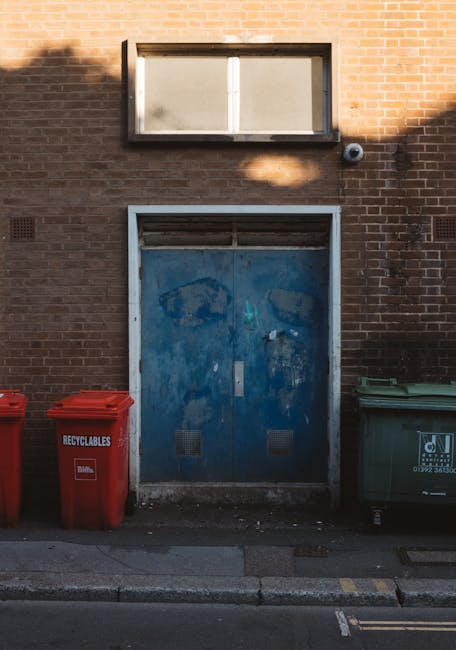
Marsh Wall estate commercial rubbish solutions for E14

If you manage a shop unit, office, managed block, or worksite around Marsh Wall estate, rubbish has a habit of arriving faster than anyone expects. One week it is a few broken chairs and some old packaging. The next, it is builders' debris, mixed office waste, or a pile of awkward items blocking the service route. That is where Marsh Wall estate commercial rubbish solutions for E14 become genuinely useful: a practical way to clear waste quickly, keep access routes open, and avoid the small chaos that waste can create when it is left too long.
This guide explains how commercial rubbish collection works in the Marsh Wall and wider E14 area, what to expect, who it helps most, and how to choose the right approach without overcomplicating it. We will also cover compliance basics, common mistakes, and a simple checklist you can actually use. No fluff. Just the stuff that matters when you need the waste gone and the place back to normal.
Why Marsh Wall estate commercial rubbish solutions for E14 Matters
Marsh Wall sits in a busy part of E14, where commercial spaces, residential blocks, serviced offices, and ongoing fit-outs can all generate waste at the same time. That mix matters. Waste is not just an eyesore in this kind of environment; it affects access, safety, presentation, and often the day-to-day running of a business or building.
In a place with shared entrances, loading restrictions, and foot traffic moving in and out all day, rubbish becomes a practical issue very quickly. Cardboard stored too long starts to dominate a back room. Old desks and fittings make corridors feel cramped. Builder's waste near a service entrance creates trip hazards. And if you have ever tried to move a bulky item down a tight lift lobby at 7:45 on a weekday, you will know exactly why planning matters.
Good waste handling also supports how a property is perceived. Whether you are letting a unit, managing a block, or running a business from Marsh Wall, tidy surroundings signal control. Mess suggests delay. Simple as that.
For local operators, commercial rubbish solutions are about more than clearance. They are about keeping operations smooth, reducing complaints, and making sure waste is handled in a way that fits the building, the schedule, and the type of material involved. A smart plan saves time, but it also reduces stress. And let's face it, that is worth a lot on a busy London day.
Expert summary: In E14, the best rubbish solution is usually the one that removes waste with the least disruption, handles mixed materials correctly, and leaves the site usable again the same day or close to it.
How Marsh Wall estate commercial rubbish solutions for E14 Works
The process is usually straightforward, though the details depend on the waste type and site layout. Most commercial rubbish collection starts with a quick assessment: what needs removing, how much there is, whether anything is hazardous, and how access works. That last part is often underestimated. A collection can be simple on paper and awkward in reality if the lift is small, the loading bay is shared, or the waste is on an upper floor.
Once the waste is identified, the service can be scheduled for a convenient time. In many commercial settings, that means early morning, between office shifts, or during quieter building hours. The aim is to avoid interrupting staff, tenants, customers, or contractors.
On the day, the team loads the waste directly from the site, then sorts it for recycling, reuse, or disposal as appropriate. Mixed commercial waste often includes cardboard, office furniture, packaging, plasterboard offcuts, fixtures, appliances, or confidential paper. Some items need special handling, especially if they are electrical, refrigerant-based, or potentially hazardous. If you are dealing with those sorts of materials, it is worth reading the dedicated guidance on hazardous waste disposal and, where relevant, fridge and appliance removal.
For office clear-outs or end-of-tenancy jobs, the flow may include furniture, monitors, paperwork, shelving, and general junk that has built up over months. A service such as office clearance is often the better fit in those cases than a generic waste-only pickup, because it is built around mixed contents rather than one category of rubbish.
The key thing to understand is that commercial rubbish solutions are not just about lifting and shifting. They are about matching the right removal method to the site, the waste stream, and the timing. If any of those three are off, the job becomes slower and less efficient. And nobody wants that.
Key Benefits and Practical Advantages
There are a few obvious reasons businesses and managing agents choose organised rubbish removal, but the less obvious benefits are often the ones people feel first.
- Less disruption: Waste is removed in one planned visit instead of being moved around repeatedly by staff.
- Better presentation: Clean corridors, entrances, and service areas matter in shared E14 properties.
- Safer working conditions: Fewer trip hazards, blocked walkways, and awkward stacks of waste.
- Time saved: Staff can stay focused on their jobs rather than making ad hoc trips to bin areas.
- More suitable handling of bulky items: Office furniture, appliances, and renovation waste are easier to remove when planned properly.
- Improved sorting and recycling: A structured removal makes it easier to separate recyclable materials from general waste.
There is also a practical financial angle. When waste grows into an unmanaged problem, it can create knock-on costs: extra labour, complaints, delayed handovers, even damage to flooring or walls if items are dragged through a building badly. None of that looks dramatic at first. Then suddenly it is a real nuisance.
For landlords and facilities managers, a good rubbish solution also helps with repeatability. Once a collection method is working, it can be used again for future refurbishments, tenant moves, or seasonal clear-outs. That consistency is underrated.
Who This Is For and When It Makes Sense
Marsh Wall estate commercial rubbish solutions for E14 are useful for a surprisingly wide range of people. If your role involves keeping a commercial space presentable or operational, chances are you will need them at some point.
Typical users include:
- Office managers clearing old desks, monitors, filing cabinets, and packaging waste.
- Retail operators dealing with stockroom clutter, display changes, or shop refits.
- Property managers responsible for communal areas, bin stores, and tenant turnover waste.
- Contractors and tradespeople generating builders' debris, timber, plasterboard, or mixed site waste.
- Hospitality venues replacing furniture, appliances, or back-of-house equipment.
- Letting and estate teams handling clearance between occupiers or after problem tenancies.
It makes sense when the waste is too much for standard bins, too awkward for staff to move alone, or too mixed for a single ordinary collection. It also makes sense when timing is tight. A business may have only a few hours to get a room cleared before a delivery, inspection, or tenant handover. In that situation, waiting for a series of small bin lifts is just not realistic.
Another sign you need a dedicated solution is when the waste is beginning to affect behaviour. People stop using a room properly because it is cluttered. Staff leave items "just for now" in a corridor. Tenants start asking questions. That is your cue.
Step-by-Step Guidance
If you want a smooth removal process, a little structure goes a long way. Here is a sensible approach that works well in commercial settings.
- Identify the waste streams. Separate furniture, general rubbish, cardboard, electrical items, and any potentially hazardous materials.
- Check access. Look at lifts, stairs, loading areas, parking, and any time restrictions on the estate.
- Estimate volume honestly. A rough count of bags, items, or van-load equivalents is usually enough to start.
- Flag awkward items early. Fridges, freezers, sofas, server racks, and wet building waste can require different handling.
- Choose the right service type. General waste removal is not always the same as builders' waste, office clearance, or furniture disposal.
- Book a suitable time slot. Pick a window that avoids peak business activity and building bottlenecks.
- Prepare the space. Clear routes, unlock access points, and make sure the items to be removed are clearly identified.
- Confirm what happens after collection. Good providers should be clear about sorting, recycling, and disposal.
A simple real-world example: a small agency on Marsh Wall needs to clear old desks, two broken printers, boxed archive files, and some cardboard from a refit. If everything is left in one pile, the job becomes slower. If the paper is grouped for secure handling and the bulky furniture is kept separate, the collection is cleaner and usually easier to complete. Small things, but they matter.
If you are unsure which route suits the job, it can help to look at supporting pages like waste removal, business waste removal, or builders waste clearance. Each one serves a slightly different need, and choosing the closest fit usually leads to a better outcome.
Expert Tips for Better Results
After enough clearances, a few patterns become obvious. The jobs that go well are rarely the ones with the biggest pile. They are the ones that were prepared properly.
- Do a 10-minute pre-sort. It sounds tiny, but separating obvious recyclables, paper, and bulky items saves time on site.
- Measure doorways and lifts. One awkward sofa or cabinet can slow an entire collection if nobody checked the dimensions.
- Label what stays. In shared commercial spaces, that prevents accidental removal of items that belong to another tenant. Annoying when it happens. Very annoying.
- Book before the deadline pressure hits. End-of-lease and handover days get messy fast.
- Tell the team about access quirks. If a key has to be collected from reception or a loading bay needs pre-booking, say so early.
- Use the right service for bulky contents. Office furniture, domestic-style clearances, and appliance removals are often better handled through dedicated routes such as furniture disposal, furniture clearance, or mattress and sofa disposal.
One thing people forget: the end of the job matters as much as the start. If the area is left swept, visible, and ready for the next trade or tenant, the whole clearance feels more valuable. That last 5% makes a big difference.
And yes, it is a bit of an unglamorous topic. But waste sorted well makes a place feel calmer. You notice the quiet afterwards.
Common Mistakes to Avoid
Most waste problems in commercial settings are not caused by huge errors. They are caused by small oversights stacking up.
- Mixing everything together. This makes sorting slower and can complicate handling of specialist items.
- Assuming bin capacity is enough. Commercial spaces often generate more waste than ordinary collections can comfortably absorb.
- Ignoring access constraints. Tight entrances, narrow corridors, and shared lifts need planning.
- Leaving removal too late. A one-day delay near a handover can become a stressful scramble.
- Forgetting about compliance-sensitive waste. Confidential paper, electricals, and hazardous items should not be treated like ordinary rubbish.
- Booking the wrong type of clearance. A general collection may be fine for mixed rubbish, but not ideal for a full office emptying or renovation waste.
It is also easy to underestimate volume. A stack of broken shelving and a few bags may not look like much until they are piled at the exit. Then suddenly it is a van-full. Funny how that happens.
Tools, Resources and Recommendations
You do not need a complicated toolkit, but a few basic resources make the whole process smoother.
- Simple inventory list: Note the main item types, quantities, and any awkward or heavy pieces.
- Floor plan or site note: Useful for access planning, especially in larger buildings or managed estates.
- Camera photos: A few clear pictures of the waste pile and access route help avoid surprises.
- Separate containers or zones: Use them for paper, general waste, electronics, and breakable items where practical.
- Secure storage for sensitive materials: If paperwork or data-bearing items are involved, handle them carefully and separately.
On the website side, the most relevant supporting pages for planning and reassurance are pricing and quotes, book online, and recycling and sustainability. Those pages are especially useful when you are comparing options, checking how a provider approaches recycling, or trying to arrange collection quickly.
If security and trust matter in your building, it may also be worth reviewing payment and security, insurance and safety, and health and safety policy. Not glamorous reading, granted, but useful when you are responsible for a site.
Law, Compliance, Standards, or Best Practice
Commercial rubbish handling in the UK comes with a duty of care mindset. In plain English, that means waste should be collected, transported, and managed properly, with attention to what the material is and where it ends up. Exact legal duties vary by waste type, but the broad expectation is consistent: do not mix hazardous material with general rubbish, do not place restricted items in the wrong stream, and make sure collection is handled by an appropriate service.
For businesses and managing agents, best practice usually includes:
- keeping waste streams separate where practical;
- making sure staff know what can and cannot be placed in each area;
- using a documented process for confidential or sensitive items;
- taking extra care with electrical items, fridges, chemicals, and anything sharp or contaminated;
- planning safe manual handling routes;
- keeping site access clear for residents, workers, and emergency movement.
If your waste includes fixtures, rubble, or renovation material, it is worth checking what the provider accepts before the job starts. A helpful reference point is what can go in a skip, even if you are not hiring a skip specifically. It gives a good sense of which materials need extra thought.
For sensitive paperwork, a dedicated route such as confidential shredding is usually the safer choice. That is one of those things people only appreciate after they have had to sort through a mountain of archived files. Not fun. Not at all.
Options, Methods, or Comparison Table
Choosing the right rubbish solution depends on the type of waste, the pace of the job, and how much disruption your site can tolerate. Here is a practical comparison.
| Method | Best for | Strengths | Limitations |
|---|---|---|---|
| Scheduled commercial rubbish collection | Ongoing mixed waste, office overflow, small-to-medium clearances | Flexible, quick, less disruption | May need good access and clear sorting |
| Office clearance | Desks, chairs, filing, IT items, room or floor clear-outs | Ideal for mixed interiors and handover jobs | Needs more planning if items are bulky or sensitive |
| Builders' waste clearance | Refits, strip-outs, light demolition waste, trade debris | Suited to renovation timelines and awkward materials | Not every material can be taken the same way |
| Furniture disposal | Single bulky items or larger furniture loads | Efficient for heavy items | Less suitable for broad mixed rubbish jobs |
| General waste removal | Routine clutter and non-specialist rubbish | Simple and practical | Not the best fit for specialist or hazardous materials |
There is no universal best method. There is only the best method for the site in front of you. That sounds obvious, but it is exactly where people go wrong.
Case Study or Real-World Example
A realistic example helps here. Imagine a managed commercial unit near Marsh Wall that has just changed occupancy. The outgoing tenant has left behind office chairs, mixed paperwork, packaging, a couple of old shelving units, and a small pile of leftover fit-out waste. The new tenant wants the space ready before Monday morning.
The first step is to separate the obvious categories: confidential paperwork, furniture, and general waste. Then the manager checks access. The lift is usable, but only for smaller loads, and the service route is shared with other occupiers. That means early collection is the safest option.
The clearance is then booked in a way that avoids peak building traffic. The team removes the furniture first, then the loose waste, then the paperwork for secure handling. The result is a room that feels immediately more usable. You can hear the difference almost - less echo, fewer obstacles, no smell of stale cardboard and old coffee lingering in the corner.
What made the job work was not one dramatic trick. It was decent planning, the right service mix, and a clear idea of what had to go. Honestly, that is usually the whole story.
Practical Checklist
Use this before booking or on the morning of collection.
- Confirm the exact waste items and rough quantity.
- Separate hazardous, electrical, and confidential materials.
- Check lift, stair, loading, and parking access.
- Make sure the waste is clearly visible and reachable.
- Inform building management if access permission is needed.
- Choose a collection window that avoids busy footfall.
- Keep a note of anything fragile, sharp, or unusually heavy.
- Decide whether the job is waste removal, office clearance, furniture clearance, or builders' waste clearance.
- Review recycling or reuse expectations if that matters to your organisation.
- Have the site contact available on the day.
If that checklist feels basic, good. Basic is what keeps jobs smooth.
Conclusion
Marsh Wall estate commercial rubbish solutions for E14 are about making busy commercial life easier to manage. They help keep workspaces clear, shared areas safe, and time-sensitive jobs on track. Whether you are clearing a single bulky item, resetting an office, or handling a mixed-site clearance after works, the real value lies in choosing a method that fits the waste, the access, and the deadline.
The best outcomes usually come from simple habits: sort early, plan access, and use the right service for the job. Do that, and waste stops being a recurring headache. It becomes just another task handled properly, which is exactly how it should be.
Get a free quote today and see how much you can save.
And if you are still weighing things up, take it one step at a time. A tidy site has a way of calming everything else around it.
Frequently Asked Questions
What counts as commercial rubbish in Marsh Wall estate and E14?
Commercial rubbish usually includes office waste, packaging, furniture, shop waste, trade debris, and other non-domestic materials generated by a business or managed property. If it comes from day-to-day commercial activity, it probably falls into this category.
Is commercial rubbish removal different from regular waste collection?
Yes. Commercial rubbish removal is usually more flexible and better suited to mixed, bulky, or time-sensitive loads. It is often arranged around access, building rules, and the type of waste rather than a standard bin schedule.
Can you remove bulky office furniture from a Marsh Wall estate building?
Usually, yes, provided the access route works and the furniture is safe to move. For larger office clear-outs, a dedicated service such as office clearance or furniture clearance is often the most practical option.
What should I do with confidential paperwork?
Keep it separate from general rubbish and use a secure disposal route. Confidential shredding is the safer approach for files containing personal, financial, or sensitive business information.
Are fridges and appliances treated as ordinary waste?
No, not usually. Fridges and similar appliances often need special handling because of electrical parts and refrigerants. A dedicated fridge and appliance removal service is a better fit.
How do I know if my waste is hazardous?
If it includes chemicals, contaminated materials, paint, certain cleaning products, fluorescent tubes, or other risky substances, treat it cautiously. When in doubt, it is better to ask before mixing it into general waste.
What is the best option for builders' debris during a refit?
For renovation or strip-out waste, builders waste clearance is often the right choice. It is better suited to rubble, timber, plasterboard, and mixed trade waste than a general rubbish collection.
How far in advance should I book?
If the job is routine, a short lead time may be fine. But for handovers, refurbishments, or busy buildings, booking earlier is wise. The awkward jobs always seem to happen at the end of the week. Funny that.
Can waste be recycled during commercial rubbish collection?
Often, yes. Many collections separate recyclable material such as cardboard, metals, and some furniture components. The practical approach depends on the mix of waste and the provider's sorting process.
What if my building has tight access or lift restrictions?
That is common in E14 and not a deal-breaker. It just needs to be explained early so the collection can be planned around lift size, loading access, timing windows, and any estate rules.
How do pricing and quotes usually work?
Pricing is often based on the type and amount of waste, access conditions, and any specialist handling required. For a clearer idea, review the provider's pricing and quotes information before you book.
Why choose a service focused on recycling and sustainability?
Because it gives you a better chance that reusable or recyclable material will be handled responsibly. That matters both environmentally and operationally, especially for businesses trying to keep standards consistent.