Commercial Waste in Canary Wharf

Commercial waste in Canary Wharf needs a service that fits office buildings, retail units and managed premises without creating disruption for tenants or visitors. We handle routine business waste removal with a clear focus on sorting, collection and responsible transfer, so your premises can keep moving while materials are taken away in an orderly way. The service is suited to workplaces that produce mixed general waste, recyclable material and bulky items that need separate handling.
Our approach is practical rather than noisy or complicated. We can remove loads that have built up over time, support regular clear-outs and deal with items that should not simply be put into standard bins. Commercial waste removal is most effective when collections are planned around your working pattern, and that is why the service is set up to suit occupied buildings, back-of-house areas and other business settings where access and timing matter.
If you are comparing options, start with the type of waste you need taken away and the space it occupies. You can then request a quotation with a clearer idea of volume, access and any separation needed for recyclable items. For a straightforward first step, make a short list of what needs removing and use that to guide your enquiry.
Business waste removal for day-to-day operations
Day-to-day business waste removal is often about keeping storage areas, service corridors and workspaces under control without interrupting normal activity. We take away common commercial waste streams that arise from offices, client areas and support spaces, including bagged rubbish, mixed loose waste and items that are no longer suitable for keeping on site. The aim is a tidy handover and a sensible route for disposal or recovery where appropriate.
Where there is a regular flow of waste, a planned service is usually easier to manage than reactive clear-outs. It helps businesses maintain better use of cupboards, bin stores and loading areas, especially where space is limited. If you are arranging an initial collection, check access points and note any lift or loading restrictions so the work can be planned around the building properly. You can also ask for a quotation once the quantity and type of waste are clear.
Commercial waste is not always uniform, so a useful enquiry should mention whether the load is mostly general rubbish, recyclable office material or bulkier items from a refurbishment, move or de-clutter. That allows the service to be matched more accurately to the job. If you need to compare disposal routes, the details on our pricing and quotes page can help you think through the main cost factors before you request a figure.
Office clearance and equipment removal

Office clearance work covers more than just bin collections. It can involve furniture, filing items, shelving, small equipment and general contents that need to be cleared before a rearrangement, relocation or refurbishment. In a busy business district, that often means work has to be organised around desks, meeting spaces and shared building rules so the process remains controlled and considerate.
Office clearance is especially useful when you need to make one area usable again without leaving behind loose objects or mixed materials. We can remove items that are no longer needed, helping to reduce clutter and improve the space available for the next stage of use. If you are unsure how to describe what needs to go, a short inventory is often enough to start the conversation. You do not need to over-explain; just note the main item types and approximate amount.
For workplaces with a mixture of furniture and disposal needs, it helps to separate what is staying, what is being reused and what is being removed. That keeps the job focused and reduces avoidable handling. A clear quotation request can mention desks, chairs, cabinets, monitor stands or other office contents if they are part of the load. When you are ready to move ahead, you can request a quotation through our contact page.
Furniture disposal and bulky item clearance
Bulky items require a different approach from bagged waste because they can take up more room, need careful handling and may have to be separated from lighter materials. We provide furniture disposal for commercial premises that need sofas, chairs, tables, cabinets or similar items removed from offices, waiting rooms and shared spaces. The service is useful when furniture is worn out, surplus to requirements or simply in the way of a change in layout.
Furniture disposal is also a sensible choice when items are awkward to move through standard waste points. The task can include dismantling where necessary, but the main aim is always to remove the items safely and leave the area manageable. Good preparation is simple: group items together if possible, note any narrow access and identify anything that should stay on site. That makes it easier to plan the right removal method.
If your enquiry includes mixed bulky items, it can help to describe them separately so the load is assessed correctly. For example, office seating, reception furniture and storage units may need different handling than standard rubbish sacks. For related item categories, our furniture clearance page gives a more focused route for arranging the removal of larger contents from commercial premises.
Separated materials and responsible handling

Commercial waste often includes materials that should be separated before disposal, especially where recyclable content, metals, plastics and general rubbish have been mixed together. We focus on sorting the waste into sensible categories so it can be handled appropriately rather than treated as one undivided load. That matters for businesses that want a cleaner, more orderly approach to disposal and a better understanding of what is leaving the site.
Responsible handling is not just about moving items away; it is about making sure the right type of waste follows the right route. In practical terms, that may mean dividing office contents from packaging, or separating reusable furniture from non-reusable material. If your business produces varied waste streams, mention them together so the collection can be matched to the contents rather than guessed from a broad description. Accurate description helps avoid delays and unnecessary back-and-forth.
Some businesses prefer a regular pattern, while others need a one-off service after a clear-out or project completion. Either way, the process is easier when the waste is grouped and ready for collection. You can use the business waste removal page to see how the service is framed for commercial settings, or move straight to an enquiry if you already know what needs taking away.
What commercial waste removal can cover
Commercial waste removal can cover a wide range of non-hazardous material from offices, premises and support areas, provided the items are suitable for the service and described clearly. The most useful part of the process is identifying what is involved before the collection is arranged, so the work can be handled in a safe and efficient order. That is especially important where one load contains both bulky items and bagged waste.
Typical jobs may include clearing redundant office contents, removing packaging after a delivery run, taking away mixed general rubbish from storage rooms or dealing with old furniture that is taking up valuable floor space. The exact mix will shape the quotation and the handling needed on the day. When you prepare your enquiry, keep it focused on the waste itself rather than the background story behind it. A simple list of item types is usually enough.
Not every load is suitable for ordinary disposal, and certain materials need special care. If you are dealing with items that could require separate handling, review them before booking rather than adding them to a general collection by default. For broader waste types that need specific treatment, our hazardous waste disposal page is the better place to start.
About Canary Wharf
Canary Wharf is a major district in London’s Docklands, on the Isle of Dogs in the London Borough of Tower Hamlets. The area is closely associated with the redevelopment of former dockland into a dense business quarter from the late twentieth century onward, and its skyline is dominated by tall office towers, glazed façades and large commercial complexes. At street level, the layout combines public squares, covered shopping routes, waterside paths and transport connections that make the district feel both corporate and highly connected. Canada Square, one of the best-known open spaces in the estate, sits among some of the tallest buildings in the United Kingdom and is a regular focal point for workers and visitors. The district is linked by Canary Wharf station on the Elizabeth line and the Jubilee line, as well as the Docklands Light Railway, which reflects its role as a modern transport hub. Beyond the main business core, the area includes older dockside geography shaped by the historic West India Docks and surrounding waterways. The presence of quays, basins and promenades gives the district a distinctive relationship with the river and the docks that preceded it. Public art, landscaped walkways and retail arcades add to the character of the place, while nearby places such as the Museum of London Docklands provide a historical counterpoint to the surrounding towers. The overall impression is of an area where twentieth-century redevelopment, financial services architecture and remnants of maritime London sit side by side, creating a sharply defined urban landscape rather than a traditional high street environment.
Planning a clear-out around busy buildings

Busy buildings often need waste removed in a way that respects shared entrances, managed loading points and security arrangements. That is why planning matters even for straightforward collections. When you are arranging a clear-out, it helps to think about where the waste is located, whether it can be moved to one place and whether any items need to be protected while the work takes place. These practical points can make the collection easier to complete cleanly.
For offices, retail back areas and mixed-use sites, the best preparation is usually simple and specific. Identify the items to be removed, choose a point of access and make sure any internal rules are clear before the collection date. If there are heavy or awkward objects, flag them early so the service can be matched to the load and handled in the right order. That way, the quotation reflects the real work rather than a rough guess.
Useful information to include with your enquiry may be item type, approximate volume, the floor or unit level, and any constraints that affect moving the waste out of the building. If you are comparing services, the office clearance page is a good reference point for projects involving furniture, fittings and work-area contents rather than simple refuse alone.
Service choices for different commercial loads
Different loads call for different levels of handling, and that is why a one-size-fits-all description does not always work for commercial waste. A bagged clear-out from a storage room is not the same as removing multiple chairs, cabinets or mixed office contents, and the collection method should reflect that difference. We keep the service broad enough to deal with ordinary commercial waste while still allowing the load to be described accurately.
Where appropriate, it may be useful to group your waste into obvious categories before the job begins. For example: recyclable paper and card, reusable furniture, broken items and mixed general waste. You do not need to process everything yourself, but a sensible division can make the quotation clearer and the removal faster to organise. Clarity at the start saves time later, especially in buildings where access windows are limited.
For jobs involving larger household-style contents from a business setting, the same organised approach still applies. Items should be identified by type rather than left to be interpreted on the day. If you need a clearer route for non-office contents, the house clearance page may also be relevant where the material resembles domestic furniture or mixed contents rather than typical workplace rubbish.
Items, access and the quotation process
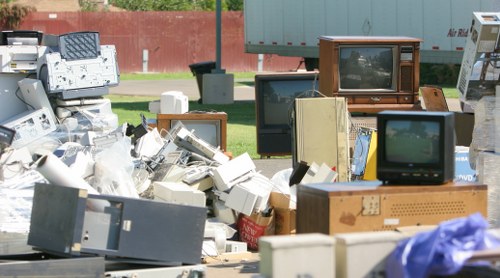
A good quotation starts with the facts that affect the work: what needs removing, how much of it there is and how it can be reached. That is particularly true in Canary Wharf, where many premises sit within managed buildings and collections may need to fit around lifts, concierge arrangements or loading restrictions. A short and accurate description is usually more helpful than a long explanation. If possible, separate the load into main item types and note any access considerations once.
The quotation process is also the right place to mention whether the waste is ready in one area or spread across several rooms, because that changes how the removal is approached. You do not need to over-prepare, but a few simple points can reduce delay and make the scope easier to understand. For example, you might mention whether the load includes furniture, general refuse, packaging or a mixture of all three. Then you can ask for the quotation on that basis.
If you are ready to proceed, send the details through and request a quotation. A clear description of the work is the best way to get an accurate response, and it gives you a straightforward starting point for arranging commercial waste removal in Canary Wharf.